
Seeing Ahead: How AI and Predictive Modelling Are Transforming Lung Health
At the 2026 Kenya International Scientific Lung Health Conference, our Public health Project Manager Bernadette Nkhata presented "Seeing Ahead: How AI and Predictive Modelling Are Transforming Lung Health," exploring how artificial intelligence is reshaping the way lung health programmes use data to inform decisions. The presentation highlighted a shift from reactive public health, responding after disease patterns emerge, to predictive public health, where routine data are used to anticipate risks and guide interventions before problems escalate.
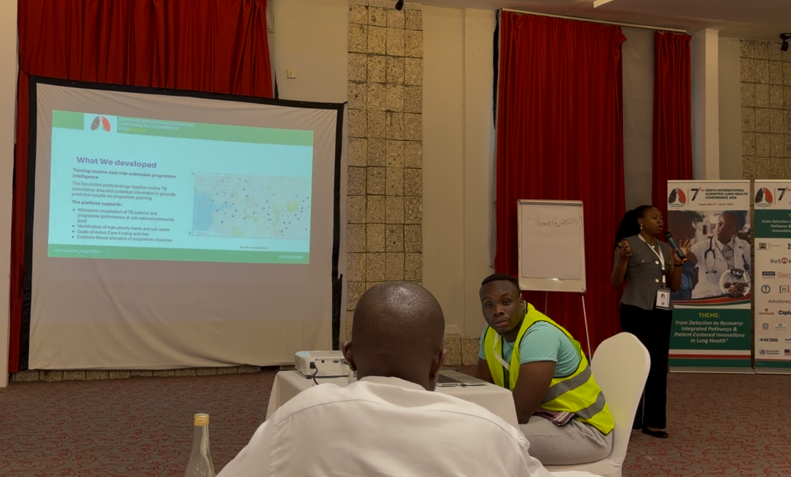
Drawing on EPCON's work across Africa, the presentation demonstrated how AI-powered decision-support tools are helping lung health and HIV programmes move beyond static reports towards dynamic, evidence-based planning. Through the Epi-control platform, routine surveillance data are combined with geospatial, demographic and contextual information to identify priority areas for intervention, support microplanning, and enable more targeted use of limited resources.

Kenya served as a key example of this approach. Working in close partnership with the National Tuberculosis, Leprosy & Lung Disease Program (NTLD – P), the Centre for Health Solutions (CHS), and other implementing partners, EPCON has developed an integrated platform that supports TB burden prediction, treatment outcomes analysis, TB preventive therapy monitoring, and interactive geospatial dashboards. The platform is deployed to help programme teams to identify high-priority communities for Active Case Finding and strengthen decision-making at both national and sub-national levels.
The presentation also highlighted how the same approach is being adapted in other settings, including Zimbabwe, Uganda and Nigeria, demonstrating the potential of predictive analytics to strengthen programme planning across different diseases and health systems. While the technology continues to evolve, one message remains clear: AI delivers the greatest value when it complements public health expertise, is built on high-quality data, and is developed in close collaboration with the people who will ultimately use it.
As lung health programmes continue to embrace digital innovation, predictive modelling offers an opportunity not only to understand where disease has been, but to better anticipate where action is needed next, helping transform routine data into smarter, more timely public health decisions.


