
Cameroon
Predicting Severe Malaria Risk in Children Under 18
EPCON has been supporting international organizations in the nation to fight Lassa Fever and severe Malaria.
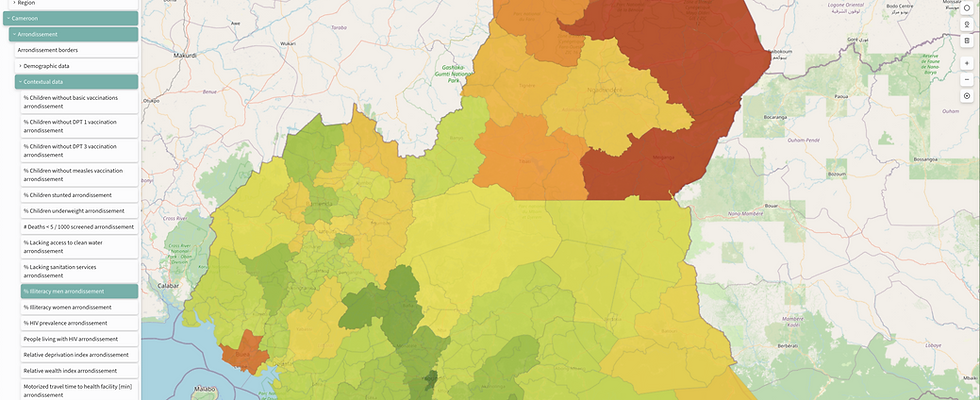
Project Context
Malaria remains one of the leading causes of childhood mortality in sub-Saharan Africa. Children under 18 are particularly vulnerable to severe forms of the disease, yet reliable, disaggregated data to guide interventions is often limited. EPCON is working with partners in six high-burden countries— Burkina Faso, Cameroon, Ghana, Guinea, Nigeria, and Senegal—to help find new evidence of burden of severe malaria in the pediatric population. By enriching survey data with Malaria specific information and contextual risk factors, this project aims to address limitations in available data. We aspire to provide new insight specially focussed on spatio-temporal transmission of severe malaria, , pin point areas at increased risk and support more effective targeting of prevention and treatment strategies.
Our Solution
Through our Epi-control platform, EPCON leverages artificial intelligence to turn a range of datasets into predictive models of disease risk. The platform has already been successfully applied in tuberculosis, leprosy, and HIV, and is now being used to predict spatio-temporal patterns of severe malaria .
With this technology, ministries of health and NGO-partners can:
-
Identify age-specific risk patterns within communities
-
Forecast transmission hotspots at neighborhood and village level
-
Improve epidemic control, routine surveillance, and access to underserved areas
EPCON's Approach
EPCON applies Bayesian inference models and other machine learning methods to map and predict malaria risk across different geographies and age groups.
-
Climate indicators (temperature, rainfall, soil moisture)
-
Population density, demographics, and settlement distribution
-
Nutritional and vaccination coverage
-
Access to healthcare facilities and travel networks
-
Malaria prevalence, ITN presence, resistance to chemical agents
-
Forest cover, vegetation types
-
Distribution of specific parasites and vectors
-
Conflict, displacement, and social vulnerability
This approach ensures that predictions capture not only biological drivers but also socio-economic and environmental factors shaping malaria transmission.
Key Outcomes and Impact
The project will provide partners and national malaria programs with:
-
Severe malaria risk rates in children under 18, disaggregated by two-year intervals
-
Population estimates of children at risk, by age group
-
High-resolution hotspot maps of malaria transmission
These insights will enable more targeted interventions, optimize allocation of resources, and improve health outcomes for the most vulnerable children.


